
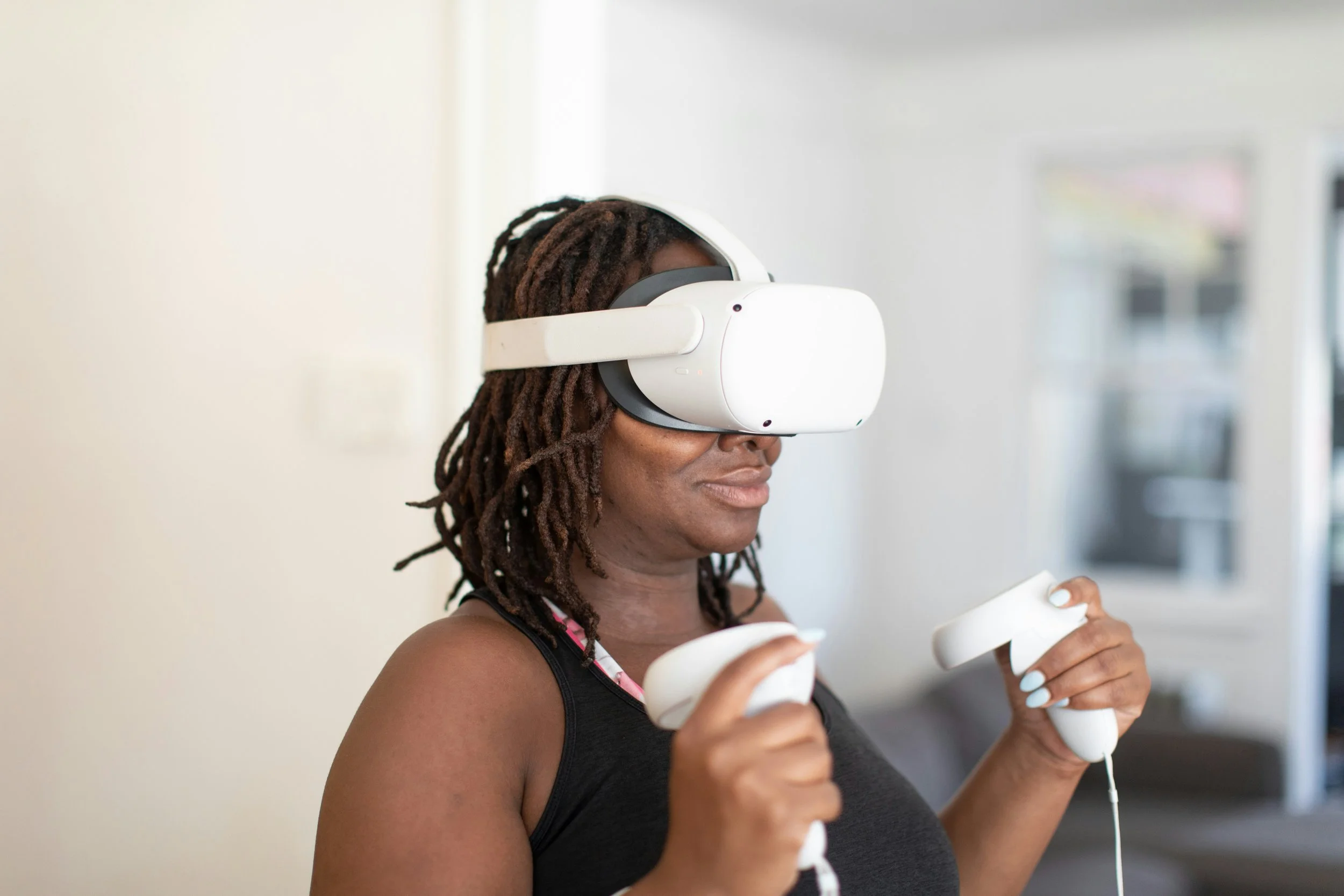
Virtual Reality Therapy
We often think of therapy as sitting on the couch and engaging in conversation with our therapist. But therapy doesn’t always need to be just talking…sometimes it involves movement, or creativity. Sometimes it involves practicing new skills in the moment, right from the office!
Virtual Reality Therapy is another way to make therapy more experiential, allowing you and your therapist to work together inside immersive environments and create opportunities for practice, insight and healing that aren’t always possible through conversation alone.
Virtual Reality (VR) Therapy is a tool some of our therapists use to help you work toward your goals. We use virtual environments where you can practice coping skills, explore challenging situations, and try new ways of responding, all while staying connected to your therapist.
Visualization can be a great tool, and VR allows you to let your visualizations come to life and experience them in real time. We can practice grounding skills, preparing for a long flight, and giving you exposure to scenarios that might cause stress in day-to-day life.
What is Virtual Reality Therapy?
Virtual Reality Therapy uses a lightweight headset to create interactive environments that respond naturally as you move through different scenarios. These environments can recreate everyday situations, provide calming spaces, or offer opportunities to practice specific skills that may be difficult to recreate in a traditional therapy office.
Throughout the experience, your therapist guides the session, helps you process emotions as they arise, and adjusts the experience based on your needs. You decide the pace, and you can pause or remove the headset whenever you choose.
How can VR Therapy be used?
VR Therapy can support many different concerns and is always tailored to your individual needs.
-
Practice responding to situations that typically create anxiety while learning grounding, mindfulness, and emotion regulation skills. The goal isn't to eliminate anxiety, but to build confidence in your ability to move through it.
-
Virtual Reality can be a powerful tool for gradual exposure therapy. You can slowly work toward situations that feel difficult, such as flying, heights, public speaking, driving, elevators, or other specific fears, at a pace that feels manageable. Imagine being able to do a test run on an airplane without having to leave the therapy office!
-
When appropriate, VR can be incorporated into trauma treatment to strengthen regulation skills, increase a sense of control, and support exposure work. We can also help you learn new skills for regulation and coping through everyday life scenarios.
-
Explore calming environments while practicing breathing, grounding, mindfulness, and other regulation skills that can help reduce overall stress and overwhelm.
-
Practice conversations, interviews, presentations, or other social situations in a supportive environment before encountering them in daily life.
Why Try Virtual Reality Therapy?
Practice Beyond The Therapy Office
Some situations are difficult, expensive, or impossible to recreate during a therapy session. VR allows you to practice in environments that more closely resemble real life while still working alongside your therapist.
Move At Your Own Pace
Experiences can be adjusted to match your comfort level and treatment goals. There is no expectation to move faster than feels manageable.
Make Therapy More Experiential
Instead of only talking about coping skills, you have the opportunity to practice using them in the moment and reflect on what works for you.
Supported By Research
Research continues to show that virtual reality can be an effective tool for exposure therapy, anxiety treatment, skills practice, and emotional regulation.
Learning Through Experience
Many people learn best by doing. VR offers an experiential way to practice new skills, notice emotional responses, and gain insight that can be difficult to access through conversation alone.
Frequently Asked Questions
-
VR Therapy is available for teens ages 14 and older and adults.
-
Each session begins with a conversation about what you'd like to work on. Together, you and your therapist decide whether a VR experience would support your goals that day.
During the experience, your therapist remains present, checking in, offering guidance, and helping you practice new skills. Afterward, you'll spend time processing what you noticed, what was challenging, and how those experiences connect to your everyday life.
The experience is collaborative. You can pause, modify, or stop the VR experience at any point.
Some sessions will have brief moments with the headset, while other sessions focusing on exposure work may spend most of the time with the headset.
-
Please inform your therapist before participating in VR therapy if you have any of the following:
A history of seizures or epilepsy
Frequent migraines, vertigo, or severe motion sickness
Significant vision or balance difficulties
Recent concussion or traumatic brain injury
Conditions affecting your ability to safely use VR equipment
Any other medical or neurological condition that may be impacted by VR use
Your therapist may ask for approval from a medical doctor to continue or may recommend modifications to ensure your safety.
-
You can take off the headset at any time. We will move at your pace and if anything feels uncomfortable, let your therapist know so we can make adjustments that feel comfortable for you.
-
VR is provided as part of your therapy session rather than as a separate service. If you have questions about insurance coverage, we're happy to help explain how your sessions are billed.
Is VR therapy right for me?
VR Therapy may be a good fit if you're looking for a more experiential approach to therapy, want opportunities to practice skills in session, or are working toward goals that benefit from gradual, supported practice.